Table of contents
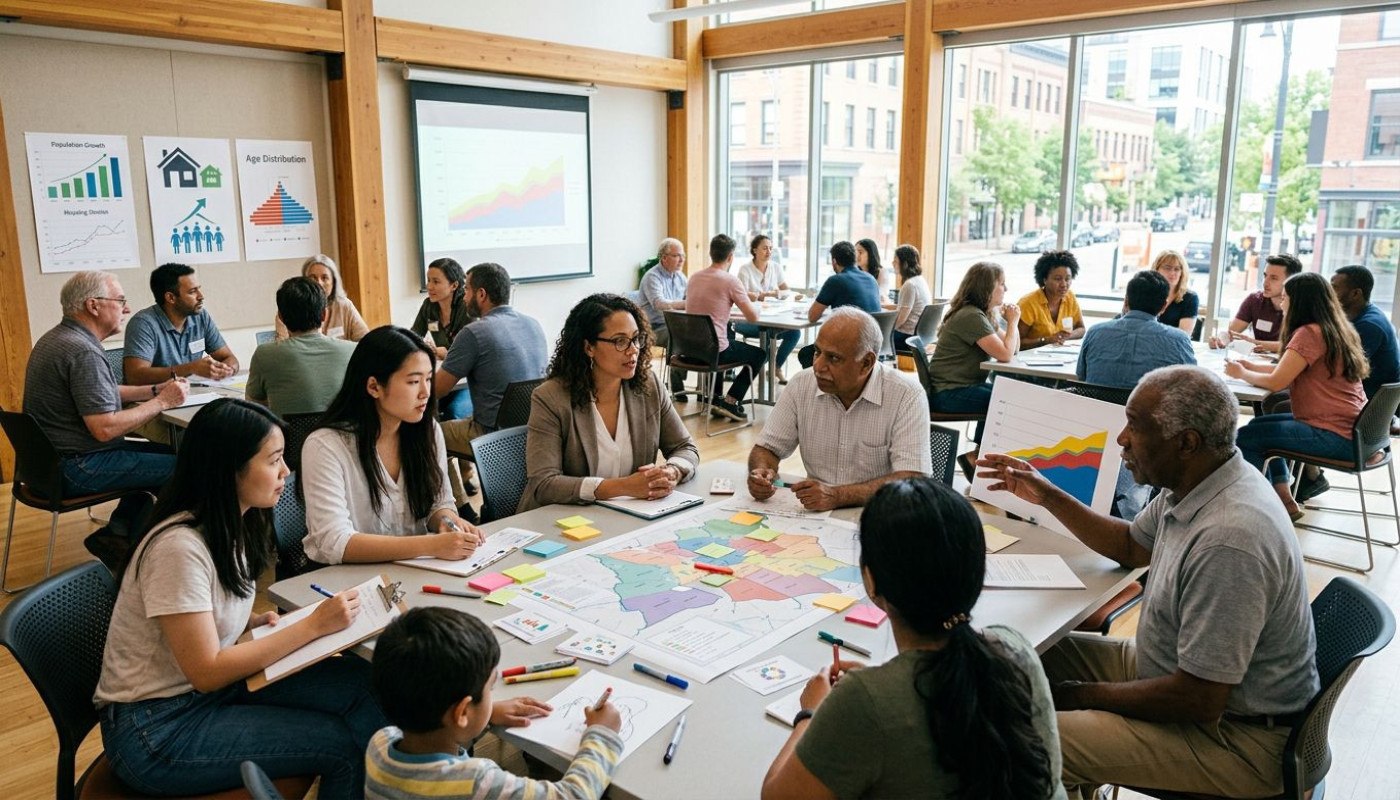
From New York’s new zoning maps to Barcelona’s neighborhood health surveys, city halls are leaning harder on public consultations to keep up with demographic change, and not just to tick a legal box. Ageing populations, new migration corridors, and shifting household sizes are redrawing demand for schools, clinics, housing, and transit faster than many municipal plans can absorb. Consultation, when it is designed well, is becoming the early-warning system that spots pressure points, tests political feasibility, and turns raw population data into decisions residents can actually live with.
Consultations are now a demographic early-warning system
Numbers tell you what happened; consultations help you catch what is happening. Census releases and annual population estimates remain the backbone of urban planning, yet they arrive with lag, methodological breaks, and limited texture on day-to-day needs, and that gap matters when a district flips from family-heavy to older and single-person households in a few years. Many large cities now pair “hard” indicators such as age structure, household composition, and net migration with “soft” intelligence gathered through town halls, deliberative panels, street intercepts, and online platforms, because the first signals of strain tend to show up as stories: longer waits at clinics, overcrowded buses at new hours, or seniors avoiding public space after dark.
There is evidence that the shift in household structure alone can reshape service demand sharply. Across OECD countries, the share of one-person households has climbed for decades, and in several major cities it is far higher than national averages, affecting everything from housing typologies to social isolation risks. When consultations surface how residents cope, for example, informal caregiving networks thinning as adult children move away, or renters doubling up despite official occupancy rules, city staff can pressure-test whether their demographic projections match lived reality. That is also why many municipalities have moved away from single, high-stakes public hearings toward repeated touchpoints, staged around decision moments, so that new information is not trapped until the end of a planning cycle.
Who speaks, who stays silent, who is missed
A consultation can fail without anyone noticing. The loudest voices often belong to homeowners with time, confidence, and familiarity with city processes, while groups most affected by demographic shifts, newcomers, young renters, precarious workers, and some minority communities, are structurally less likely to attend evening meetings or file written submissions. Research on participation patterns consistently finds unequal engagement by income, education, and age, and city governments increasingly treat representativeness as a design challenge, not a moral aspiration. The practical question becomes blunt: if a neighborhood is gaining thousands of residents through migration, but the consultation sample is overwhelmingly long-term residents, what exactly is being “consulted”?
To address that skew, cities have experimented with targeted recruitment, multilingual outreach, childcare at meetings, pop-up kiosks at transit hubs, and partnerships with trusted local organizations. Some have adopted deliberative methods, including citizens’ assemblies and juries, to mirror demographic diversity more closely; the aim is not just more voices, but a structured way to weigh trade-offs. Digital tools can broaden reach, yet they can also deepen bias if participation requires stable internet access or if algorithms amplify mobilized groups, and so hybrid models are becoming common. The best practice emerging from multiple cities is to publish participation dashboards, who participated, in what language, from which districts, at what age brackets, and to treat gaps as actionable. If older residents dominate feedback on a plan that will shape housing for the next generation, that is not “community input”; it is a sampling error with political consequences.
When input becomes policy, not theatre
Consultations earn trust only when residents can trace a line from what they said to what the city did. This is harder than it sounds, because demographic management inevitably involves painful trade-offs: densification near transit versus parking loss, shelter capacity versus neighborhood resistance, school consolidation versus longer commutes for children. Cities that handle this well tend to do three things. First, they disclose constraints early, including budgets, legal limits, and timelines, so the public is not asked to “co-design” what cannot be changed. Second, they close the loop with plain-language reports showing which proposals were accepted, modified, or rejected, and why. Third, they align consultation with binding decisions, zoning votes, capital plans, procurement, rather than letting it float as an add-on.
There is also a geopolitical layer to demographic shifts that municipalities cannot ignore. Rising international mobility, remote work, and differing citizenship and residency regimes shape who can settle where, and under what conditions, and that filters down into urban housing markets and service loads. Cities with large expatriate populations, or with sectors dependent on mobile talent, often hear in consultations about documentation hurdles, family reunification timelines, or uncertainty around long-term status, and those themes can influence municipal advocacy toward national governments. For readers trying to understand how mobility policies interact with local realities, the price of Vanuatu citizenship program is one example that illustrates how global pathways to residency and citizenship are discussed in public forums, and then ripple into questions cities must answer, such as schooling capacity, rental demand, and integration services.
The new battleground: housing, schools, clinics
Demographic change becomes politically real when it hits the services people touch every day. Housing is usually first. Rapid population growth, even if modest at city scale, can concentrate in a few districts, pushing rents up, crowding shared apartments, and shifting demand toward smaller units, while ageing can raise the need for accessible homes and proximity to care. Consultations reveal the friction points that raw vacancy rates cannot: landlords converting family units to short-term rentals, overcrowding that residents do not report, or seniors stuck in walk-up buildings. When these patterns are documented early, cities can calibrate policies such as inclusionary zoning, accessory dwelling rules, or targeted subsidies, and they can defend them with a clearer public record.
Schools and clinics follow close behind, and the consultation dynamics differ. Parents organize quickly, and they often bring granular knowledge, which bus route is unsafe, which special-needs services are missing, which catchment boundaries are outdated. Health demand, by contrast, can be less visible until it spikes, especially with ageing, mental health pressures, or uneven access for migrants. Cities increasingly use consultations alongside administrative data, appointment wait times, emergency calls, and community health surveys to map where capacity is breaking. Transport and public space also sit on the front line: if a neighborhood’s median age rises, perceptions of safety and the need for benches, lighting, and step-free access can dominate feedback, while districts attracting younger workers may demand late-night transit and safer cycling corridors. The common thread is that consultations turn demographic shifts into concrete, fundable projects, and they give elected officials the political cover to prioritize where the need is greatest.
Planning it well: timelines, money, and support
Residents benefit most when they know what is coming next. Before joining a consultation, check whether it is linked to a binding decision, a zoning change, a capital budget, a service contract; if it is vague, ask for dates, milestones, and the document that will adopt the outcome. Budget questions should be explicit: what is funded, what is only proposed, and what depends on national or regional grants. Cities often have underused supports, translation services, participation stipends, childcare, disability access, and travel reimbursement, and asking for them can widen who gets heard.
On the same subject

From Headlines To Handshakes: Why Up-to-date News Drives Better Business Decisions

How Is Digital Marketing Reshaping The Luxury Wine Market?

Assessing The Economic Viability Of GPT Chatbot Deployment In Small Businesses

The Impact Of Online Sports Betting On The Chilean Economy

The Economic Impact of First Deposit Bonuses in the Online Casino Industry
